Apprenticeship Types
Apprenticeships are structured, “earn‑while‑you‑learn” programs that combine paid on‑the‑job training with related technical instruction, leading to a recognized, portable credential. In the United States, there are over 900 officially recognized apprenticeable occupations across nearly every sector of the economy.
Major Apprenticeship Pathways (just some of them), but we can help to develop just about anything into an apprenticeable position.
Construction and skilled trades (electricians, plumbers, carpenters, HVAC technicians, elevator technicians). These programs remain some of the largest and best‑known registered apprenticeships.
Manufacturing and industrial trades (machinists, industrial maintenance technicians, welders, mechatronics technicians). These roles support America’s industrial base and advanced manufacturing.
Transportation and automotive (diesel mechanics, automotive technicians, logistics, and rail occupations). Apprenticeships here ensure safe, efficient movement of people and goods.
Healthcare and life sciences (medical assistants, dental assistants, pharmacy technicians, biomedical equipment technicians). These programs help meet growing demand for skilled healthcare workers.
Information technology and emerging fields (software development, cybersecurity, data support roles, network technicians). Apprenticeships are increasingly used as a non‑traditional pathway into tech careers.
Service, business, and public sector roles (cooks and culinary workers, early childhood educators in some states, public safety, and other community‑facing occupations). These expand apprenticeship beyond the traditional trades.
Teaching: New teacher apprenticeship models allow aspiring educators to work alongside mentor teachers while completing coursework and progressing toward licensure, creating a paid, clinical pathway into the classroom.
Project management: Apprenticeships in project management blend business, leadership, and technical skills, preparing apprentices to plan, coordinate, and deliver complex projects in sectors like construction, technology, and life sciences.
Artificial intelligence: Emerging AI apprenticeships focus on skills such as data analysis, machine learning, and AI engineering, giving apprentices hands‑on experience applying AI tools to real business problems.


Presidential Focus
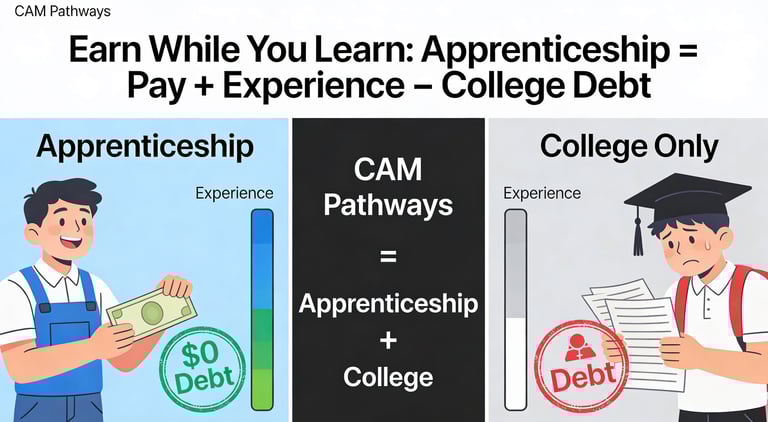
For decades, college has been the push for society. If you didn't go to college, you were perceived as not having accomplished anything. Forget the fact that only a small portion of people actually graduated from college, even after spending thousands and thousands of dollars and being in significant debt. Things have changed. Under President Donald Trump, the federal government has highlighted apprenticeships as a primary strategy for preparing Americans for high‑paying, skilled trade and technical jobs. His administration set goals to significantly increase the number of active apprentices and called for over one million government‑supported apprenticeships annually by expanding programs into new industries. Executive actions and grant initiatives have emphasized:
Strengthening and “modernizing” Registered Apprenticeships while encouraging more employer‑led models that closely align with workforce needs.
Expanding apprenticeship opportunities in infrastructure, manufacturing, construction, and other skilled trades that are central to rebuilding the nation’s physical and industrial capacity.
Encouraging growth in emerging and non‑traditional sectors, including information technology, teacher preparation, project management, and artificial intelligence, so apprenticeships keep pace with the future of work.
Since President Trump’s return to office, hundreds of thousands of new apprentices have reportedly entered programs, with several hundred thousand active apprentices nationwide in fields ranging from construction and manufacturing to healthcare, education, IT, and AI‑related roles. your text here...

Why it Matters to Us?
For learners and employers, apprenticeships offer a proven route to high‑skill, high‑wage careers without requiring a traditional four‑year degree. With more than 900 apprenticeable occupations recognized by the U.S. Department of Labor—including expanding opportunities in teaching, project management, and artificial intelligence—CAM Pathways can help students and business partners tap into this broad ecosystem, connecting community‑rooted learning with nationally recognized apprenticeship pathways that lead directly to meaningful work. With CAM, it is about competency (college or training), application (apprenticeship), and mastery (prove it).